
Recommended conditions for working with GD Filament filaments
ABS +
Density: 1.04 G / m3 Dielectric constant: min. 15.7 kV; max. 34kV Nozzle temperature: 240 ° С – 260 ° С Bed temperature: 80 ° С – 100 ° С Bed: all types Fan: NO. Odorless – can be operated on open type printers Note: One option (especially for closed type printers – such as Ultimaker) is to use HIPS as a support material, which dissolves in D-Limonene after printing.
ASA
Density: 1.07 G / m3 Dielectric constant: min. 40kV; max. 105kV Nozzle temperature: 220 ° С – 250 ° С Bed temperature: 80 ° С – 100 ° С Bed: all types Fan: NO
FLEX (TPU)
Density: 1.19 G / m3 Dielectric constant: no data Nozzle temperature: 220° С – 250° С. Bed temperature: 60° С – 70° С Bed: all types / PEI is great. Fan: YES (15-20% max or fan OFF). Extruder – direct drive. Print speed: You should experiment with your printer, but 15-20 mm / s is a medium good start. It stick very good to the bed, even its hard to take it out. use a spatule and you could heat additionally the bed to take the TPU ready model out.
FLEX (TPE)
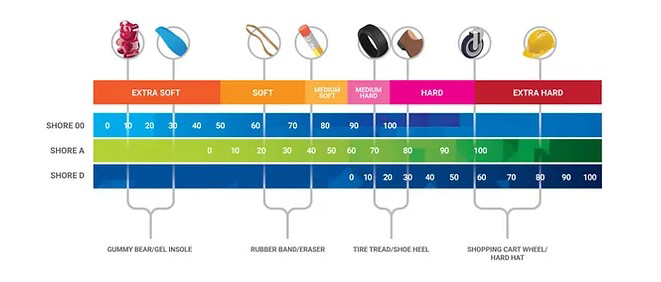
Since 2021 we provide as well another flexible type filaments – TPE, or thermoplastic elastomer. It is a not easy to print filament, because it wraps and after 6-7 layers unsticks from the bed. The recommendations for a successful print are: PRINT SLOWLY! We print with 10-12 mm/s. DO NOT USE RETRACTION, or keep it at minimum possible value. Nozzle temperature: 220° С. For sticking at the bed USE CELLOTAPE, or any type Cellulose tape. The TPE stick very good to it. Bed temperature – 40° С (with Cellotape). Another option is to use any kind of hairspray and print at bed temperature of 70° С. You should experiment with your system to decide which one works best for you.
Note: Types of flexible filaments
PA6
Polyamide is a very wide used polymer in our everyday life, called nylon. We offer two polymers of PA – PA6 and PA12. Density: 1.01 G / m3 Dielectric constant: min. 24kV; max. 55kV Nozzle temperature: 240 ° С – 260 ° С Bed temperature: 90 ° С – 100 ° С Bed: epoxy: we recommend FR4/G10 gyrolite. Fan: NO
PA12
Density: 1.01 G / m3 Dielectric constant: min. 24kV; max. 55kV Nozzle temperature: 240 ° С – 260 ° С Bed temperature: 90 ° С – 100 ° С Bed: epoxy: we recommend FR4/G10 gyrolite. Fan: NO
PC \ ABS
Density: 1.10 G / m3 Dielectric constant: min. 16kV; max. 35kV Nozzle temperature: 250 ° C – 290 ° C Bed temperature: 100 ° С – 110 ° С Bed: all types Fan: NO
PCTG
PCTG is a material very similar to PETG but with some extra advantages. PCTG (polycyclohexylene dimethylene terephthalate glicol modified) is a new copolymer filament that has higher impact strength, higher transparency and better chemical resistance compared to PETG. PCTG is also very easy to print, even on open printers. Adhesion between layers is very good. PCTG has a very lower tendency for absorbing water than PETG. Its more elascit and durable. Density: 1.27 G / m3 Dielectric constant: min. 45kV; max. 45kV Nozzle temperature: 240 ° С – 260 ° С Bed temperature: 80 ° С – 90 ° С Bed: all types (recommended PEI) Fan: YES (10-20%) Pay attention to the print speed and travel speed settings.
PETG
PETG is a material with many advantages, but also with features for printing. Characteristic of it is its great tendency to absorb water, which is why Viagi should be stored in closed (zip-lock) bags with a desiccator bag (moisture absorber, silica gel). It has a tendency to form fibers. In case of high humidity or long-term storage, we recommend drying in a household oven at 65 ° C for 7 hours. Allow to cool in the oven without opening it and immediately place the PETG roll in a desiccant bag. Density: 1.27 G / m3 Dielectric constant: min. 45kV; max. 45kV Nozzle temperature: 240 ° С – 260 ° С Bed temperature: 80 ° С – 90 ° С Bed: all types (recommended PEI) Fan: YES (10-20%) Pay attention to the print speed and travel speed settings.
PLA
Density: 1.24 G / m3 Dielectric constant: no data Nozzle temperature: 180 ° С – 220 ° С Bed temperature: 50 ° С – 60 ° С Bed: all types Fan: YES WOOD Density: 1.28 G / m3 Dielectric constant: no data Nozzle temperature: 180 ° С – 220 ° С Bed temperature: 50 ° С – 60 ° С Bed: all types Fan: YES
PP
Density: 0.895 – 0.92 G / m3. Lowest density filament. Dielectric constant: 2.2 – 2.6 @ 1MHz. Nozzle temperature: 220 ° С – 250 ° С (First layer 220°C, other layers – 240°C). Bed temperature: 60 °С – 70°C. Bed: Smooth PEI with PP tape, PP bed (Prusa), Glass. Fan: YES. Speed 20 mm/s; 25 mm/s perimeters. Flow – 125. Retraction – 0.4 mm, Brim – YES.
WOOD
Density: 1.28 G / m3 Dielectric constant: no data Nozzle temperature: 180 ° С – 220 ° С Bed temperature: 50 ° С – 60 ° С Bed: all types Fan: YES
SILK
Density: no data 1.24 G / m3 Dielectric constant: no data Nozzle temperature: 180 ° С – 220 ° С Bed temperature: 50 ° С – 60 ° С Bed: all types Fan: YES
INTERFERENT
Density: 1.24 G / m3 Dielectric constant: no data Nozzle temperature: 180 ° С – 220 ° С Bed temperature: 50 ° С – 60 ° С Bed: all types Fan: YES
HIPS
Density: 1.02 G / m3 Dielectric constant: no data Nozzle temperature: 230 ° C – 245 ° C Bed temperature: 100 ° С – 115 ° С Bed: all types Fan: NO We recommend working in a closed box.
For PLA max, SILK, WOOD and INTRERFERENT, bed: glass / mirror, we recommend 10-15% aqueous suspension of C200 (polyvinyl acetate adhesive) Apply a thin layer with a brush on the preheated bed and leave for a few minutes to dry. If after cooling your part cannot come off – just wet the glass / mirror with water and leave it for a few minutes. Water will penetrate under the part and dissolve the C200 suspension. This suspension is very durable and can be applied for more than a month with a single application. We also recommend working at a bed temperature higher by 5°C. Working on PEI bed is great. We use sometimes stick glue to make the adhesion better.
For ABS +, PC / ABS, HIPS – bed: glass / mirror, we recommend 10-15% acetone suspension of ABS +. We also recommend applying it in a thin layer with a brush on the preheated bed. It can also be sprayed if you have a sprayer that is convenient for you (be careful because acetone can dissolve some plastic sprayers).
For PA12 we recommend using a special epoxy bed (Garolite) or similar.
HIPS is a product that can be used as a stand-alone model, as well as a support material for ABS, ABS + or PC / ABS. Of course, in this case you need to have a printer with two extruders. Once printing is complete, simply soak the model with the support in D-Limonene, which dissolves the HIPS support and leaves you with a clean model. The amount of d-limonene to use depends on the size of your model. Can be used repeatedly.
Like our page in facebook!